
Category: For specific groups

Unlock in prison!

In February 2016, we were invited by Plias Resettlement to visit Wormwood Scrubs and Pentonville prisons to present workshops on criminal records and disclosure (they deliver the National Careers Service contract there). The aim was to look at the ongoing effects of a criminal record, how this can affect a person’s ability to reintegrate into society upon release from prison, and how to overcome these.


‘We recommend the workshops that Unlock deliver; they are informative, relevant and provide people with convictions with up to date and accurate information that enables them to move on with their lives.’  PLIAS Resettlement, 2016 


Plias gave us a fairly flexible brief in running a 2-hour workshop. This is where the idea behind our Top 10 things to know about a criminal record came from (which we developed at the same time). We wanted to keep things simple, but wanted to cover some of the key areas of life that people need to be aware of.
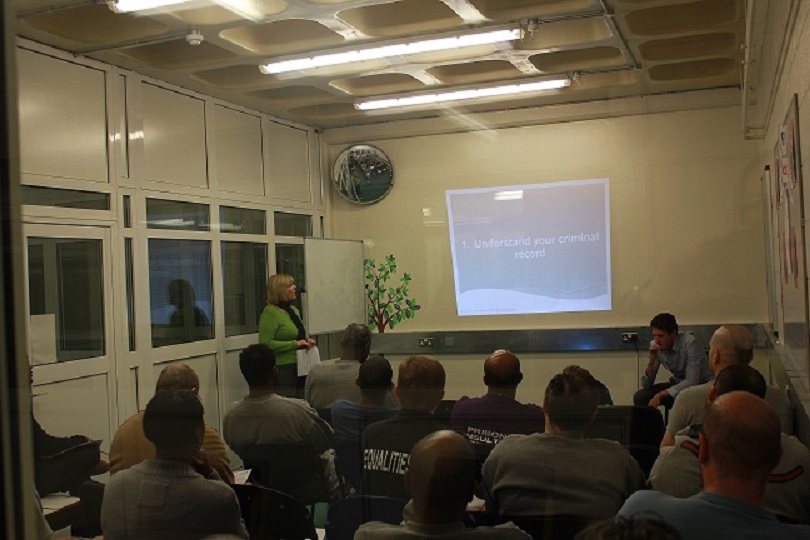
 

Wormwood Scrubs Workshop

Our 1st workshop at Wormwood Scrubs (photograph courtesy of PLIAS with permission from the prison)


The result was a new ‘Moving on with Conviction’ workshop. The idea being that we would highlight 10 key areas which we think, from experience of running our helpline, are important for anybody with a criminal record to know about, with plenty of opportunity for questions.

We had about 20 men come along to the classroom in the education department at Wormwood Scrubs. With a relatively small number of people, we were able to make the session very interactive with lots of questions and answers and many of the men shared their own personal experiences. Some comments after the event were:-


I think workshops like the one today should take place more often – enlightening


Very positive approach and really well presented


Full of confidence from the first one, we headed off to Pentonville a couple of days later. This one was quite different; it took place in the large prison chapel with around 70 men turning up. The size of the room and the number of people meant that the session had to be far more ‘controlled’ which made it difficult for too much interaction. Initially, this made it quite difficult to engage with the group.

We recognise how hard it is to take any positives out of being in prison and it’s easy to think that a criminal record will prevent you being able to move on successfully in the future. It was clear that many of the men in Pentonville felt this way.

Explaining to the group that there were may employers out there that were willing to give people a second chance and highlighting how 50% of Unlock’s staff and trustees had a criminal record seemed to endorse the positive message we were trying to put across.

From then on, the atmosphere in the room seemed to change, with the session becoming more upbeat. Comments from the men included:-


I understand a lot now about jobs and how to disclose


I felt the event was done very well under pressure


We are grateful to the support of Plias in covering our costs in preparing and delivering these sessions. We’ve come away with some ideas of how we might be able to do more of these in the future, as it’s clear to us that many people in prison are simply not made aware of things they need to be alert to in dealing with the impact of having a criminal record once they’re released.


Written by Debbie Sadler, Advice Manager


More information

You can find out more about our fair access to employment project here or get in touch with us.

Practical self-help information can be found on understanding your criminal record and disclosing to employers.


Our approach to working with other organisations

Working with other organisations is important to us. It often means we can achieve more than by working alone or we can help other organisations to achieve more themselves. For example, we:

We also provide open-access to a vast amount of information and resources through our websites. These websites are set up primarily to support people with convictions as part of the range of support we provide directly to individuals. However, we want as many people to benefit from our resources and we encourage organisations to use them as part of the delivery of their own work.

We are, however, seeing a rise in the number of enquiries from service-providers received by our helpline, which is set up and funded to provide support for individuals themselves.

That’s why we’ve published a document which explains our approach to working with other organisations. The aim is to clarify what support we can offer other organisations and how it can be accessed.

You can download our approach here.

Criminal record disclosure training endorsed by the Probation Institute

We’re delighted to announce that Unlock’s criminal record disclosure training has been endorsed by the Probation Institute. It also means that we’re now a Probation Institute Endorsed Learning Provider.

Commenting on the news, Christopher Stacey, Co-director of Unlock, said:

“Those working in the probation sector are one of the key audiences for our criminal record disclosure training. We know that, historically, probation officers have had very little training on supporting their clients with the complex laws around criminal records and how to practically deal with disclosing their criminal record to employers and others.”


“The main reason we deliver training to probation providers and other organisations that deliver front-line services is so that we improve the quality of the support provided to people with convictions. We know from the feedback that we get that the training is high-quality and relevant to probation providers. We hope that this endorsement process will enable us to work with more probation services to help them to more effectively support their clients with the disclosure of their criminal records.”


Savas Hadjipavlou, Chief Executive of the Probation Institute, said:

“We are very pleased that the partnership between Unlock and the Probation Institute announced last October is producing results and particularly delighted that Unlock has become a Probation Institute Endorsed Learning Provider. Our endorsement arrangements support those working in probation enabling access to relevant and high quality training that can contribute to their continuing professional development”


More information

  1. You can find out more about our criminal record disclosure training
  2. This news has also been posted on the Probation Institute’s website
  3. You can find out more about the Probation Institute Learning Provider Endorsement Scheme
  4. Press/media enquiries

Monthly update – April 2016

We’ve just published our update for April 2016.


This months update includes:

  1. New information on receiving a criminal record whilst you’re in employment
  2. Advice on the importance of understanding what’s on your criminal record and knowing what level of criminal record check an employer will be doing
  3. Updated information on insurance brokers and motor insurers
  4. A personal view on the consequences of a criminal record and working abroad
  5. A link to the results of an analysis and evaluation of our helpline


The full update provides a summary of:

  1. the latest updates to our self-help information site for people with convictions
  2. recent posts to our online magazine, theRecord
  3. other news and developments that might be of interest to individuals with a criminal record


Read the April 2016 update in full here


Best wishes,

Unlock


Notes

  • All previous updates can be found in full in the ‘Latest updates‘ section of our Information Hub
  • For more self-help information, please visit unlock.devchd.com/information-and-advice/
  • If you have any questions about this information, please contact our helpline
  • If you’ve been forwarded this email, you can sign up to receive these updates directly by clicking here and selecting to receive ‘News/updates for people with convictions’
  • If you have found this information useful, please leave us your feedback and/or consider making a donation.


New research into impact of childhood criminal records and launch of campaign


A child who has offended in England and Wales is shackled to the mistakes of their past by a criminal record system which is punitive, and holds them back from reaching their full potential, according to a report released today by the Standing Committee for Youth Justice (SCYJ).

The report, which reviews criminal record systems in over a dozen countries, finds England and Wales to be an outlier in the extent to which it ties children to past offending.

“A child in England and Wales is not only more likely to acquire a criminal record, but this record will affect them for longer, and more profoundly, than in any of the countries reviewed”

said Penelope Gibbs, Chair of the SCYJ.

“A child who has shoplifted a couple of times will suffer the disproportionate penalty of not only having the offences recorded for life, but also having to disclose it at key points – such as entering university or applying for certain jobs, such as a teacher, or a police officer. No other country reviewed inflicts such tough penalties on a child who offends.”

The far reaching effects on a child go well beyond their sentence. Children with a criminal record face stigma and discrimination in accessing education, training, employment, travel and housing and these obstacles can follow a child into adulthood impacting adversely on their life chances and their ability to reintegrate positively in to society.

In 2013/14 over 60,000 cautions and convictions – all with criminal record implications – were handed out to children in England and Wales. These records will have to be disclosed for many years, and some forever.

The SCYJ is launching a campaign today calling for radical reform of the law on childhood criminal records. Its recommendations include shorter rehabilitation periods, expanding the current filtering system, and wiping the slate clean after ten years.

Christopher Stacey, Co-director of Unlock, in supporting SCYJ’s campaign for reform, said:

“There are over 10.5 million people in the UK with a criminal record, with the vast majority of these being obtained when people are young. Every day we’re contacted by people who are facing stigma and discrimination because of offences they committed when they were under 18. This directly impacts on children’s chances long into adulthood, often for the rest of their lives.”


“Children that commit crime need to be rehabilitated and our youth justice system is supposed to be specifically designed to not impose retributions. However, when it comes to criminal records, the system treats children in a very similar way to adults.”


“There are many parts to the criminal record disclosure system that are disproportionate and unnecessary. A specific attempt to ensure that criminal records do not blight the lives of children is long-overdue. That’s why we’re actively supporting the campaign launched today. The recommended changes would result in a fairer and more calibrated system.”


More information

  1. More information about the report and campaign can be found on the SCYJ website.
  2. The Standing Committee for Youth Justice (SCYJ) is a membership body, representing over fifty organisations, campaigning for a better youth justice system. They pool the expertise of their members to work on issues surrounding children in trouble with the law. Their work focuses on policy and legislation affecting all aspects of the youth justice system and young people caught up in it – from policing to resettlement.
  3. Unlock is supporting this campaign as part of our policy and campaign work.
  4. More information about Unlock’s policy work on the DBS filtering process.
  5. Unlock press/media enquiries.

Some examples of the people we’ve helped

Looking back over the last couple of months, we’ve written up a few examples of the people we’ve helped.

We hope they give a good idea of how we help people.

However, more importantly than our role, we think that these examples show how people with convictions are able to overcome some of the barriers that have been put in their way due to their criminal record.

We’ve posted the examples below as case studies in the support section of our website:


Mia – Travel abroad whilst on licence 

Jamie – You can be forgotten – Success when applying to Google 

Connor – Finally accepted into university

Anne – Should a criminal record prevent the award of a PhD?


News for employers has moved onto our website for employers

As the development of our website for employers continues, we’ll no longer be posting news specifically for employers on the main Unlock website. Instead, we’ll be posting directly onto the news section Recruit!our website for employers.

You can continue to find the news about our Fair Access to Employment project on this site, and there will be occasions where similar posts will appear on both sites where the news relates to both employers and other groups.

As always, to receive any or all of our news updates direct to your email inbox just sign up to our mailing list.

Monthly update – March 2016

We’ve just published our update for March 2016.


This months updates include:

  1. New information on Sexual Harm Prevention Orders and Sexual Risk Orders
  2. Updated information on travelling to Canada
  3. A personal view on the experiences of securing a visa to the USA after a second attempt
  4. A further example of sombody successfully applying to have Google search links removed
  5. A link to a briefing we prepared for an event hosted by the Association of British Insurers around insurance and criminal convictions


The full update provides a summary of:

  1. the latest updates to our self-help information site for people with convictions
  2. recent posts to our online magazine, theRecord
  3. other news and developments that might be of interest to individuals with a criminal record


Read the March 2016 update in full here


Best wishes,

Unlock


Notes

  • All previous updates can be found in full in the ‘Latest updates‘ section of our Information Hub
  • For more self-help information, please visit unlock.devchd.com/information-and-advice/
  • If you have any questions about this information, please contact our helpline
  • If you’ve been forwarded this email, you can sign up to receive these updates directly by clicking here and selecting to receive ‘News/updates for people with convictions’
  • If you have found this information useful, please leave us your feedback and/or consider making a donation.


The Charities Bill receives Royal Assent


On the 16th March, the Charities Bill received Royal Assent.

Following on from concerns raised by Sir Edward Garnier in January, we’re pleased to see that:

  1. The Government has delayed the introduction of the changes to a minimum of 12 months (which is up from potentially only 6 months) which gives charities and people affected by the changes a chance to understand them and prepare accordingly
  2. The Government has responded to our concern about how offences from overseas were going to be treated by, instead, applying the Rehabilitation of Offenders Act as it applies in this country
  3. The Charity Commission has set up a working group and will consult with charities on the review of the waiver process
  4. The Government is going to lay a report on the impact of the bill on people with criminal records

We’re now focusing our efforts on working with the Charity Commission to ensure that:

  1. The review of the waiver process results in a fairer and more inclusive approach towards dealing with people who have convictions that want to become trustees of charities.
  2. There is clear guidance available to both charities and individuals on the impact of these changes and how they can work with the waiver process

We will continue to keep the trustee section of our website up to date with news and developments as they arise.


Useful links

An independent evaluation of our helpline

Today, we’re delighted to publish Unlocking the helpline, an independent analysis and evaluation of our confidential peer-run helpline carried out by Professor Sue Wilkinson of the University of York.

Ever since Unlock started as a charity over 15 years ago, we’ve provided peer advice to people with convictions. Eight years ago we employed our first dedicated member of staff to run our helpline and for over 7 years we’ve been recruiting volunteers from the community in Kent (including from nearby open prisons).

Although a lot has changed in that time, one thing has remained the same – people with convictions continue to come to us looking for information, advice and support to try and deal with the stigma and discrimination they’re facing because of their criminal record.

We speak to thousands of people every year – people facing a wide-range of issues relating to their criminal records. Finding a job, getting insurance, renting a house and going abroad on holiday, to name but a few.

However, as an independent service that’s charitably funded and reliant on trusts, foundations and donations to continue operating, it’s important that we can show that what we’re doing is making a difference and that it deserves support. As is the case with many helplines, it’s hard to show the impact it has on the people that contact us.

So we set about trying to find out more. It wasn’t really about numbers. We know how many people we speak to. We have a good idea of who they are, where they come from and what problems they’re having. What we didn’t know was answers to questions like:

  1. How useful is our helpline?
  2. How helpful is it that it’s peer run (i.e. run by people with convictions)
  3. What works well?
  4. Where could we improve?

That’s why a couple of years ago we embarked on undertaking an independent evaluation of our helpline with the support of Professor Sue Wilkinson of the University of York; she’s an expert in conversational analysis. We worked hard to make sure that the system we set up would enable a robust evaluation to take place without getting in the way of the confidentiality we attach to the helpline.

Over the space of five months, two of our helpline advisors recorded over 200 calls (with the callers’ permission). We then handed over the recordings to Sue and her team and waited for the results.What you can read below is a summary of the report and its key findings. You can also download the full report, which has been independently written by the author, Sue Wilkinson.

We are delighted with the findings in Unlocking the helpline – with this report we have strong, indepedent evidence to show how our helpline works and how it operates. It shows the value of having people with personal experience, the benefit of having a supportive voice at the end of the phone and the importance of knowing you’re speaking to somebody who knows what they’re talking about.

We hope that this report will support our efforts in continuing the run our helpline in a way that is independent, confidential, high-quality, peer run and reliable.

Some of the findings and comments in the report that stood out to me were:

“Overall, the helpline appears extremely effective as a source of information, and it is clearly also providing callers with a significant amount of non-informational support.”


“The Unlock helpline is relatively unusual in that the call-takers do not strive for neutrality: rather, one of its ‘hallmarks’ is the degree of understanding and empathy that is displayed by the call-takers, as part of the process of providing non-informational help and support for callers.”


“Call-takers promote positive thinking and discourage negative thinking.”


“Offering reassurance and boosting confidence fit well with Unlock’s aim of empowerment of people with convictions.”


“Call-takers clearly draw on their personal and professional experience”

We are grateful to Professor Sue Wilkinson of the University of York and her team for all their hard work on this report. We hope you find the report an interesting read.


Useful links

  1. Find out more about the evaluation here
  2. You can download the full evaluation here
  3. More details about the helpline that Unlock runs can be found here
  4. If you’re interested in supporting our helpline, you can donate to us here or visit the ‘get involved’ section of our website.

We want to make sure that our website is as helpful as possible.

Letting us know if you easily found what you were looking for or not enables us to continue to improve our service for you and others.

Was it easy to find what you were looking for?

Thank you for your feedback.

12.5 million people have criminal records in the UK. We need your help to help them.

Help support us now