
Tag: Disclosure of criminal record -

Allow me to talk about my past and you might give me a better future

Having a criminal record can make it difficult to get into employment but as Ben has discovered, a diagnosis of PTSD makes it even more so.

I came out of prison after serving 3 months of a six-month sentence.

To give you some background to my conviction, I was sent home from military service with combat stress. The military tried to help me by putting me on a six-week treatment programme but after a week it was agreed that my symptoms were far too complex for them to treat and so the decision was taken to send me home. My head was all over the place and I just wanted to put my car through a brick wall and do away with myself.

I thought I might feel better if I were able to explain how I felt. Thinking it might be easier to talk to my wife over a drink, we headed off to a local pub. However, I ended up getting absolutely paralytic drunk and on the way home had a fantastic idea – I’d ring the police and tell them that I was planning on blowing up a local mosque.

When the police arrived at the phone box from which I’d made the call they came on masse – three patrol cars in all. I tried to explain how I was feeling and why I’d done what I’d done. They had to arrest me and I went along willingly; in a strange way I thought I might be able to get some help for my problems.

My case was heard at Crown Court where the prosecution agreed with my barrister that my motives were not racially motivated and that nothing would be served by sending me to prison. Both recommended that I have 1-1 counselling through the probation service. However, the judge stated that he had to make an example of me and so prison it was.

I did my time with no problems or complaints. It was a short sentence and I just kept my head down. Sadly I didn’t get any help or counselling and when I was released I was really in the same position as I’d been before I went to prison. The only difference was that nobody wanted to know me – so much for having served my time!!!

I found it incredibly difficult to get work and it feels like I’m constantly being punished for a stupid mistake I made just to try to get some help for myself.

I eventually manged to get some counselling and was diagnosed with PTSD. The treatment I’ve received has really helped me and I feel like I’m in a much better place.

Believing that I’d never be able to get a job I decided that the only option I had would be to work for myself. I decided to set up a photography business which I’m pleased to say is slowly getting off the ground.

I’ve been in touch with all the sports clubs in my local area, especially those which have kids teams (parents love photos of their off-spring in action). It’s important for me to show that I’m no risk to any of the children that I’m photographing and so whenever I’m asked, I’m happy to show clubs a copy of my enhanced DBS check. Inevitably, I’ll be asked about the time I spent in prison. I tell them why I did what I did and how I came to be in that position.

The majority of clubs I’ve spoken to have absolutely no issue with the fact that I’ve been in prison; they seem to be more concerned about the fact that I’ve been diagnosed with military PTSD – I’m sure they think that I’m some sort of axe wielding maniac.

I’ve never used my PTSD as an excuse for my behaviour. What I did was a cry for help and I’m sure that the PTSD led to the bad choices I made in seeking this.

I’ve embraced and engaged with the treatment that I’ve been offered and I’ve learnt coping mechanisms to help me deal with my triggers. In the same way that I’m happy to discuss my criminal record, I’d have no problem talking about my PTSD especially if it helped employers get a better understanding of it.

By Ben  (name changed to protect identity)

Useful links

Lets be inclusive not exclusive – a possible solution to re-offending

Andi is of the firm belief that inclusion is at the heart of preventing re-offending. Read how his own experiences have shaped his views.

I had a childhood that was plagued with crime, poverty, drugs, violence and adversity. This meant spending some time in care, school exclusion and heavy drugs use at an early age.

I was convicted and sentenced to 18 months YOI at 17, twenty months YOI at 19, four months at 21 and then two years as an adult at 22.

I have always worked in between these sentences and my offences were alcohol or substance misuse related. I got work through recruitment agencies and chose to never disclose my convictions. I believed that I would get the job first and prove that I was a hard worker, then if they found out, I’d explain that this was the reason why I didn’t disclose.

In 2007 whilst I was sweeping the floor in a warehouse I heard that the Leeds Youth Justice Service were looking for volunteers. I thought I might be good at working with kids like myself and help them avoid making similar choices and mistakes to me. I also felt it would help me achieve a career I thought I deserved.

As I was going to be working with kids and needed to have an enhanced DBS check, I disclosed my convictions. I explained that I had qualifications from prison but didn’t know how to put them to good use and I managed to convince them to let me volunteer with the service. This was the evidence I needed to show that I had the skills to turn my unfortunate life around.

Whilst volunteering, a temporary paid opportunity arose working as a support worker for a sport programme in partnership with a local rugby club. I was amazed when I discovered that my application had been successful and that I’d be paid to work with kids they said were ‘hard to reach’ when in fact they all seemed to hold their hands out to me.

Staff at Leeds YJS saw how well I worked with the kids and how we formed relationships based on trust; we spoke together, related to each other and perceived the world in a similar way. It wasn’t long before I was offered the chance to be a sessional worker; although this meant I didn’t have the security of a contract, it was a risk I was happy to take.

18 months later, a full time job became available and, confident that my skills and knowledge were commensurate with my colleagues, I applied and got the job. However, when it came to my contract of employment having to be drawn up by HR, they had some real concerns about my criminal record. My line manager was apparently told by HR

It’s a risk taking him on and, if anything goes wrong, you’ll have to pay the consequences”

Luckily my line manager knew me reasonably well and knew all about my criminal record. I’d managed to build up a good relationship with him and he was happy to fight my corner. I wouldn’t have blamed him if he’d chosen to turn his back on me; he had a mortgage to pay and a family to support and being told that it would be his fault if I messed up was unfair. It might have been too much for him and stopped him from giving me a chance.

However, he did take the risk and I’ve been working for the service for the last 12 years. I’ve become a specialist in my field and qualified in Youth Justice in 2013. I’ve created programme after programme that have supported children in desisting from offending and therefore reduced the number of potential victims. I’ve also written a book called “Your Honour Can I Tell You My Story?”

As people with convictions, we’re in a unique position to assist others to make better choices. However, due to the DBS process, we’re the least likely to obtain such positions. Lots of us are disadvantaged from the start of our lives. 25% of adults in prison were in care and up to 42% excluded from school.

Criminal records are a barrier, however a lack of education, gaps in employment history and an inability to articulate our stories without employers believing we are shirking responsibility are also barriers.

Inclusion is the heart beat of preventing re-offending so we must focus on this. We must find a way of better regulating the Rehabilitation of Offenders Act to ensure employers are not discriminating against people on the basis of their convictions. People with convictions have so much to offer and like me, will forever be grateful to the organisations that believed in us and recognised our strengths and not just the ‘risk’ we pose.

I believe living in a risk averse society is a significant factor in why our re-offending rates post custody for young people and adults are so high. Probation don’t always assist offenders in this area focusing instead on public protection. They often create further barriers by sharing risk information with employers when the individual chooses not to.

This is not strengths based and I don’t believe this is an approach that keeps the public safe. Yes we need to protect the public but each case is different. People that are seeking employment are trying to move away from offending. If I’m right, we are socially marginalising this particular group and increasing the risk of re-offending so an alternative approach is required for those upon release from custody with inclusion at it’s core.

By Andi

Useful links

Disclosing convictions received during my employment

After receiving two convictions in a short space of time, Deena was anxious about having to explain them to her current employer. Having been employed for 5 years, she didn’t for one minute consider not disclosing and in this case, the result was positive.

I’d worked for my employer for over 5 years. I’d had regular DBS checks which always came back ‘clean’ and assumed that would continue to be the case.

However, for reasons I won’t go into now, things really changed for me in 2018 and I received a couple of convictions over the course of eight months. As I work in a school (probably one of the most risk averse sectors there can be), I’ve had to disclose these to my employer – however, what happened after that may surprise you.

My first run in with the law came at the end of December 2017 when I’d just driven my ex-partner back to his house. I was really tired and if I’m honest, driving on auto-pilot. As I looked in my mirror, I realised that there was a police car right behind me and so I put my foot down (absolutely not a sensible thing to do). When I did eventually stop, I was arrested and charged with dangerous driving and failing to stop. When I went into work the next day I asked to speak to my manager and told her what had happened. I explained that I’d probably end up being disqualified from driving but this wouldn’t affect my ability to do my job. My manager thanked me for informing her and told me to keep her updated of the situation.

As expected, when I went to court in July 2018, I was disqualified from driving for 18 months. However, I also receive a suspended sentence. When I told my manager the news she was more worried about how I was coping with the unexpected suspended sentence rather than being concerned with the impact of my conviction on the school. So, I continued to work.

Then during the school summer holidays, I was arrested for harassment. My court date was set for mid-August and I was pretty sure that I wouldn’t be walking out of court that day; after all I had a suspended sentence hanging over me. I’d given my mum my employers contact details and told her to ring the school immediately she knew what my sentence was.

My guardian angel must have been looking after me that day because a further 4 weeks was added onto my suspended sentence and I got a 2 year restraining order.

There wasn’t any media interest in my case so I guess I could have just returned to work and said nothing but, given the support I’d had in the past by my employers, that just didn’t seem the right thing to do.

Returning to work in September was nerve-racking. I knew it was more than likely that I’d be dismissed but I wanted the chance to explain what had happened. I felt sick as I walked into my manager’s office and, as I started to talk, my mouth completely dried up. Somehow I managed to explain what had happened as well as reassuring her that I would never get into any trouble again. I’d realised how important my work was to me and how many people I’d let down.

The result – I’m still employed with the school.

I don’t know whether they would have found out about my conviction if I hadn’t told them but I didn’t want the stress or worry of constantly looking over my shoulder. I’d worked really hard in the time I’d been at the school, was considered a loyal member of staff and made some really good friends – it would have been terrible if I’d been dismissed because I’d not disclosed my criminal record and been escorted off the premises. I would have lost so much more than just my job.

It was nobody’s fault but my own that I’d received a criminal record and it’s important to recognise that and take ownership of it. The decision to disclose obviously worked out well for me but, even if I’d been sacked I wouldn’t have regretted doing what I did.

By Deena (name changed to protect identity)


Useful links

Has ‘Ban the Box’ turned a job interview into another courtroom?

Many people with an unspent conviction will welcome an organisation removing the box asking about criminal convictions from their application forms. However, Noah feels that for individuals with more complex criminal records, there may be some unintended consequences of doing so unless employers make other changes too.


For anybody that doesn’t know, ‘Ban the Box’ is an initiative that encourages businesses to stop asking ‘Do you have any criminal convictions?’ and including a tick box on their application forms. This box makes it far too easy for employers to immediately bin job applicants that have a criminal record, even if minor or long ago. Ban the Box means each applicant can be evaluated as an individual, on merit, rather than immediately dismissed as an ex-offender. For many, this works well. Those who have convictions from the distant past may find them easier to explain in a job interview than on a form, and can explain the circumstances. However,for others, Ban the Box can make a job interview feel like a courtroom.

For someone with a clear, linear narrative, Ban the Box can work really well. For example:

There was a time in my youth where I ran with the wrong crowd and got into some trouble. I did some time in prison for burglary. It was a stupid thing to do and I’ve long since moved on from it.”

You can see how an employer will view this disclosure – it’s an offence from a long time ago, the individual made some mistakes, learned from them and has had a ‘clean’ record since then.

How about:

I’ve been in and out of prison over the last eight years, mainly for crimes associated with a drug habit. I’ve been clean for six months, thanks to a drug rehab programme. I’ve completely turned my life around.”

An employer in this situation will need to make an assessment of the person’s recovery and their criminal record, and decide whether a ‘career criminal’ with a previous drug problem will make a positive contribution to their business or whether they will damage their brand. However the criminal behaviour is clearly linked to a behaviour that the person is now being treated for. This can reassure an employer.

Those with a more complicated history can present a more difficult situation for an employer to judge. Some offences are relatively minor and may result in a fine or community order but are nonetheless socially unacceptable, for example racially aggravated harassment or animal cruelty. These behaviours can be difficult to explain, even if they were a long time ago. Those convicted of murder, or sexual or terrorism offences can struggle to create a relatable narrative around their offence.

This often means that ex-offenders with difficult histories are faced with the humiliation of attending job interviews where their offences are examined and judged, only to be rejected at a later date. Some employers have banned the box but still operate blanket bans on some conviction types. Some larger employers leave decisions to local managers and this can result in conflicting decisions between sites. Sometimes interviewers are not the ones making a decision – a person might be recommended for the job having disclosed their criminal record, only to be rejected by HR at a later stage.

At least in the courtroom, the accused has legal representation and the rule of law guides any decision taken by a judge. In a job interview, an employer will make a decision based on their personal interpretation of the applicant’s narrative. Therefore, the unintended consequence of Ban the Box is sentencing ex-offenders with difficult conviction histories to a lifetime of job interview humiliation.

By Noah (name changed to protect identity)


A comment from Unlock

Employment can dramatically reduce re-offending rates and contribute to a safer society, yet – over 5 years since the launch of the Ban the Box – three-quarters of employers continue to ask about criminal records at application stage.

We think it’s difficult to justify collecting this data at such an early stage, and encourage the government to find ways to put Ban the Box on a statutory footing. However, that’s not the end of the story. As Noah describes, those with an unspent conviction will usually be asked to disclose at some stage – usually at interview. We don’t have reliable data on whether applicants with convictions are more likely to succeed if disclosing in interview, but asking later in the process allows an applicant to be judged on merit first.

Disclosing in interview can be daunting, particularly for those who don’t have a clear, linear explanation for their conviction/s. There are a few things employers can do to manage the process better.

  1. Be upfront – If you operate a blanket ban on conviction types, let applicants know this before they apply. Nobody wants to get their hopes up, send off a CV and plan their disclosure only to be told ‘sorry, we don’t take XXX’.
  2. Focus on what’s relevant – Employers should consider whether asking about criminal records is necessary and if so, what convictions are relevant to the role. Some employers do this well: we know of a financial services company that asks only about theft, fraud or other finance related convictions. Another has a blanket ban on offences against children but don’t ask about any other offences. This is a positive step, but employers who take this approach must have a clear policy and follow it. A DBS check will reveal convictions of any category. If you decide only financial convictions are relevant, you must ensure you ignore other conviction types when making decisions.
  3. Only ask the preferred candidate/s – Once a person has been selected on merit, there is no question that they are the best person for the job. Asking about criminal records at offer stage means employers can be really clear about what is driving their decision. Sometimes this will mean the preferred candidate will be rejected because their criminal record really does make them unsuitable for the role. More often, it will mean that a skilled and qualified candidate is considered holistically and fairly, and employers won’t miss out on someone who has a past, but also has potential.

Useful links

‘No’ didn’t mean ‘no’, it meant ‘not right now’ – getting a job on my second application

After having a job offer withdrawn after disclosing a conviction, Sam wasn’t put off from applying again for the same job two years later, only this time she was adamant that she’d get a different result.
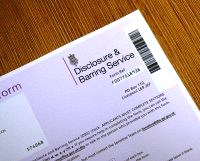
 

Two years ago I was interviewed for a job with a government department. At the end of the interview I was given a form which asked me to disclose details of any cautions or convictions and, although I was able to provide the facts of my conviction, I wasn’t able to include an actual disclosure statement.

I was delighted to receive a provisional offer and at that stage, I was told that the organisation would be carrying out a formal criminal record check. I wasn’t unduly worried about this as I’d already disclosed my conviction. However, when the DBS certificate came back and I handed it over, the job offer was withdrawn.

Unfortunately, my conviction is one that will never be filtered from standard or enhanced DBS checks because although I have just one conviction, it has two counts. I was 19 at the time and claiming benefits but I’d managed to get some casual shifts in a local hotel. Looking back, I was stupid and naive and I’d only actually worked two shifts when the DWP caught up with me. I paid back all the money I owed them which was approximately £250 and for roughly six months I didn’t know whether I was going to be prosecuted or not.

When I received the court summons, I immediately sought legal advice. My solicitor couldn’t understand why I was being prosecuted, it was a relatively small amount of money and I’d paid it all back. I later found out that many employees at the hotel had been signing on whilst working and the DWP wanted to make an example of everybody. I received a 2-year conditional discharge and £50 costs.

So, despite the ultimately unsuccessful outcome of that first job offer with the government department when I saw the job being advertised again two years later, I decided that I’d reapply. This time round I was asked to disclose any cautions and/or convictions at the provisional offer stage. I was also given the opportunity to submit a full disclosure statement online which I hadn’t been given before.

As soon as I received my DBS certificate, I sent it to the recruitment department along with a hard copy of my disclosure letter. There was no way that I was going down without a fight this time.

I didn’t hear anything for 12 weeks and then, out of the blue, I received a phone call telling me I’d done really well in my application and interview. However, although my conviction was spent, they couldn’t take it lightly as it was for benefit fraud. The lady I spoke to then went on to say:

But as the conviction was almost 30 years ago, we consider you to be low risk and would like to offer you the job.

It was absolutely fantastic news.

I’ve  been in the job for 4 weeks now and really love it. I’m so glad I made the decision to reapply.

By Sam (name changed to protect identity)


Comment by Unlock

We believe that Sam’s story reflects some positive changes that this particular government department has made to it’s recruitment practice towards applicants with a criminal record. By not asking about criminal records until the provisional job offer stage, but then at that point having a clear assessment process that puts information into context. This allows proportionate decisions to be made. Sam (and we) rightly question why the conviction still needs to be there after so long, and that’s the focus of our work on challenging the current DBS filtering regime.


Useful links

‘Yes I’ve got some historic convictions but do the public really need protecting from me?’

People receive convictions for a number of reasons but as Gemma’s story demonstrates, what’s written on your DBS certificate will never adequately describe the story behind those offences. After a period of being free from offending, is there really anything to be gained by making people relive the traumatic experiences they’ve been through?


I’m a teacher. I worked hard for my qualification and work damn hard at my job, mostly because I love teaching but also because deep down, I’ll always feel like I have something to prove. That’s because over 20 years ago I was a ‘persistent young offender’. Subconsciously, I will probably always give that extra effort to show myself, and others, that I am a good person.

One thing that does really strike me about the current DBS debates are the talks about the stigma of the criminal record verses protection of the public. There’s lots of discussion about how Bob can’t get a job in insurance because of his drunk and disorderly conduct conviction while he was a student. I’m really sorry for Bob, and I hope he finds another position – and not to belittle Bob’s situation, but I don’t think the government appreciates the depths this stigma can reach taking into consideration the variation of narratives of people with criminal convictions. I also don’t think the government realises the way in which, sometimes, stigma and public protection interact.

In my profession, when I apply for jobs, I have to sit in a room in front of a panel of complete strangers and explain why, as a 12-14 year old girl, I ended up with a criminal record that spans over five pages of double-sided A4 paper. I know the score by now, I feel it physically as the discussion gets nearer. My hands start to shake, my mouth goes dry, and I turn from a confident professional to that broken child I once was. My brain won’t function and I want to say as few words as I can get away with. I know it’s too late now, they know, the sickness, the shame, the dirtiness, they can see it, they know what I am. How can they not look at my record and just know?

Despite this chapter in my life being over 20 years ago, disclosing makes me feel like it was yesterday.

And what do I say? I don’t want them to think that I think I’m not responsible for my past actions. I want them to understand my story, but I don’t want to tell them about it. You see for me, my offending wasn’t just a set of unlawful actions – it was a whole trajectory, as is the case for many others. When I’m faced with the disclosure of my record, I’m faced with revisiting painful life experiences and trauma. It isn’t like I haven’t dealt with these life experiences either, I’m a (mostly) functional adult with a normal life, only my close family and one friend knows about my history. It is not something I routinely think about. It’s just that now and again the DBS system literally forces me to revisit the pain to make sure the public are protected from me…

To protect the public from me, I have to tell strangers that one of my convictions is for assaulting one of the men that abused me.

So to make sure the public are protected from me I have to sit in a room and tell complete strangers my story. To protect the public from me, I have to tell strangers how I was systematically abused from the age of 6. To protect the public from me, I have to tell strangers I was excluded from school at 12 and got in with the ‘wrong sort’. To protect the public from me, I have to tell strangers that one of my convictions is for assaulting one of the men that abused me. To protect the public from me, I have to tell strangers that at 13 I had a 20 year old ‘boyfriend’ who was a heroin addict, that I was infatuated with and literally did anything for. To protect the public from me, I have to tell complete strangers that I was taken into care because I was ‘out of control’ and to protect the public from me, I have to tell strangers that I nearly went to a secure unit for my own protection!

Under the current system, my convictions will never be filtered. I have worked so hard and I am a good person yet I am stopped from living some aspects of my life. As well as this, I am forced to revisit a whole life chapter when I do disclose, something that makes me feel raw. Some employers are really supportive about this but some have treated me like I am a bit of a freak show, asking questions I feel like I can’t avoid. Aside from the way I experience disclosure I was not able to pursue my first career choice. I’ve been denied work experience placements. I can’t even help out on my children’s school trips. I am a member of the public too, isn’t it about time that I had some protection.

By Gemma (name changed to protect identity)


A comment from Unlock

It’s obvious from Gemma’s story that she is a well-qualified and dedicated teacher. Her passion for teaching has meant that time and time again she’s put herself through the agony of disclosing her criminal record. We don’t believe that Gemma should be put in this position and it was for this reason that we intervened in the Supreme Court case which challenged the Government’s approach to disclosing old and minor criminal records on DBS checks. We’re hoping for a favourable outcome before the end of the year.

Useful links

Disclosing to an employer – Some ‘do’s’ and ‘don’ts’

Having been through the process of disclosing her conviction to several employers over the years, Stacey provides some tips on what’s worked for her.


My conviction is now quite old and for many years I’ve been working very successfully in spite of it. In fact I’d say my criminal record is most definitely in the past and hasn’t bothered me for many years. However, this hasn’t always been the case and I’ve had my fair share of up’s and down’s when applying for jobs.

However, along the way, I’ve learned a few things about disclosure which I’d like to share. Some of these things may be quite obvious but when you’re going through the process it’s not always easy to see things clearly.

Applying for jobs very soon after you’ve been convicted can be difficult and, as time passes between the past and the present, prospective employers will be able to see that for x number of years you’ve had a clean record.

When to disclose will often be determined by the employer – they could ask on the application form, at interview or once you’ve been offered the job. The best scenario for me was being asked to disclose once I’d been offered a job. At that stage, I was able to get an idea of how approachable my ‘boss’ was going to be and this often helped with the things I included in my disclosure.

I’d always prepare a disclosure statement in advance so I knew exactly what I was going to say; I’d practice it in front of a mirror. I found this made it easier to get my story across without getting distracted or upset and meant that I didn’t go home afterwards wishing I’d said this or that. Other than disclosing the actual conviction, there are a few other things I’d suggest:

DON’T

  • Blame anyone else for your offence, always take responsibility for your actions
  • Complain about the consequences (for example how harsh you thought your sentence was)
  • Make excuses – there’s a fine line between mitigating factors and trying to condone your behaviour.

DO

  • Point out that you’d never had any dealings with the police before your conviction (assuming you hadn’t) and you have no intention of ever having dealings with them in the future
  • Describe it as a lapse in good judgement (if you can) and if there were extenuating circumstances do explain them, especially if the circumstances are no longer an issue. If they are, explain the actions you’ve taken to deal with them in an appropriate way
  • Be remorseful (about committing the crime – not about getting caught!)
  • Explain it as something that happened but that you have learned from it and are now ready and determined to rebuild your life. Speak positively and confidently.

If you’re finding it hard to get a paid job, you might want to think about doing some voluntary work. Once you’ve got your foot in the door and shown that you’re willing to work for nothing, then many organisations will consider you favourably as and when a paid vacancy becomes available.  It always looks good on your CV and prospective employers admire the fact that you’ve given your services for free.

There are some situations where your criminal conviction will actually be a bonus because you’ll be able to relate to and empathise with certain clients groups. A classic case of turning a negative into a positive.

I hope this helps and for anybody that’s currently looking for a job, I wish you the very best of luck – it will happen.

By Stacey (name changed to protect identity)


Useful links

  • Comment – Let us know your thoughts on this post by commenting below
  • Information – We have some practical self-help information on disclosing to an employer
  • Discuss this issue – There are some interesting discussions related to this issue on our online forum


The differing attitudes of employers towards criminal records makes securing a job even harder

Having received a particularly negative response to her criminal record from an employer (despite having worked for them on a temporary basis), Christine was on the verge of changing career. However, a more positive approach at her next interview convinced Christine that although the job she’d applied for was the same, the employer was very very different.

My criminal record didn’t look great. Nothing more than shoplifting convictions but there were a lot of them. I imagine I’d be referred to as a serial offender. I won’t go into the details of why I received so many, my story is probably similar to a lot of other peoples who have issues with drugs or alcohol. Stealing became my only way of maintaining my habit.

I was really lucky and with the support of some fantastic family, friends and professionals, managed to come through this difficult time in my life and cleaned myself up. I went back to college and did a health and social care qualification and before too long I’d managed to secure myself a temporary job as a support worker through an agency.

Disclosing to the agency was the first time I’d talked about my convictions and what had led me to get them and it was a horrendous experience. Surprisingly, the agency didn’t seem to have any problems with my convictions, they were far more impressed with what I’d achieved since.

I loved my job working with individuals who were experiencing real difficulties and being able to work with them to address the challenges they faced and reduce some of the problems and risks. Not only did I love the job but more importantly, I was good at it and this soon came to the attention of the employer who offered me a full time permanent position.

I was told that I’d have to have an enhanced DBS check done but I’d already had one through the agency and I was absolutely certain that they’d passed these details onto the employer before I started the temporary work. It transpired that this wasn’t the case.

As soon as I received my new DBS certificate I handed it over to my manager and was completely stunned when she told me to go wait in her office. I’d not been waiting long when she returned and told me that she was very sorry but due to the results of my enhanced check the permanent job offer was being withdrawn and I would have to leave the premises straight away. I tried to explain that I’d disclosed to the agency and had assumed that this information had been passed on. I’m pretty certain that she believed me but the company policy prevented her from employing me. I could see that she was embarrassed and upset about the situation, but not as much as I was.

For the next month I did nothing, I questioned whether I’d be able to continue working in this field or whether I should give up and turn my hand to something else. After seeking advice from friends and family I decided to give it one last shot and started applying for other support worker roles.

I was offered a couple of interviews and disclosed my convictions at both. I’d be lying if I said it was easier than the first time but it had to be done and the interview seemed the best time. Within a couple of weeks I’d been offered a job. I’d told the HR manager at the interview that I had a recent enhanced DBS certificate and she asked me if I could take it in to her. She also explained that she would be carrying out a risk assessment at the same time.

Following my previous experience I’d pretty much convinced myself that the job offer would be withdrawn and I prepared myself for an interrogation. As I sat in front of the HR manager I could feel my eyes welling up and my lips becoming dry but she told me to relax and just explain my convictions in my own words. She didn’t ask me any questions, just listened and, after my disclosure I saw her sign the form in front of her and then ask me when I could start work.

By Christine (name changed to protect identity)


Useful links

  1. Comment – Let us know your thoughts on this post by commenting below
  2. Information – We have practical self-help information on disclosing criminal records to employers
  3. Discuss this issue – There are some interesting discussions on disclosing criminal records to employers on our online forum.

Learning to read in prison has opened so many doors!

Margaret had never told anybody that she couldn’t read or write. However, the need to complete courses as part of her sentence plan made her realise that she needed to get some help to improve her literacy skills. 


I must have been about 6 years old when I started school but I’d left by the time I was 9. I thought it was boring, a waste of time plus I had no friends to play with – as a traveller girl, I found it difficult to make friends outside my own community.

As I only mixed with others from the traveller community, I was brought up learning to fight, drink and bate non-travellers. I started getting into trouble from quite an early age (usually because I was drunk) but only really got a ‘slap on the wrist’ from the local copper but as the fights and drinking escalated so did the punishments. I got a couple of short prison sentences before receiving an IPP sentence (an indeterminate sentence for public protection) in 2006 after being convicted of arson when I accidently set a fence alight.

Not being able to read or write had never really been a problem for me. I’d never told anybody but I just learnt ways of getting by. However, the IPP sentence started to cause me some real problems – I couldn’t complete my menu or canteen sheet but more importantly, I wasn’t able to do the courses that were part of my sentence plan. I could bluff my way through the menu and canteen sheet even though I sometimes ended up eating roast chicken, gravy and salad. But when faced with the probation courses, my aggression just covered up the fact that I couldn’t read.

I was really lucky to have a great Personal Officer who realised that my aggression and bad behaviour was masking something else (I don’t know how) and that if I carried on the way I was going, I was likely to spend years and years in prison. He was the first person I told about my problems with reading and he encouraged me to sign up for the Toe-by-Toe programme run in the prison to help prisoners overcome their reading problems.

I was a bit apprehensive to start with but was put in touch with a really friendly mentor who I met up with on most days. I started to learn how to change letters or words into sounds and in a really short space of time, I was reading ‘easy-reader’ books accurately and confidently. I started to look forward to going to the library each week to pick out a new book.

Admitting that I couldn’t read or write very well meant that I got extra help with my courses and, by the time I sat my Parole Board I’d done everything that was expected of me.

When I left prison I knew I was never going back and although I’m proud of my traveller roots, I wanted to do something different, be somebody different. I found a course at my local college that didn’t have any formal entry requirements and I went along to sign up as a mature student. When the receptionist looked at the blank space under the section which asked about “educational history” she told me that the course would be ‘intensive and advanced’. When I told her that I wasn’t stupid I’d just never been to school, she looked totally horrified.

I loved every minute of my college course but knew that finding a job with my criminal record was going to be the next battle I’d have to overcome. How many companies would want to employ somebody with convictions for violence and arson? Having come so far though, there was no way I was going to give up easily.

I wasn’t sure what I wanted to do (I’d never actually had a job before prison) but my probation officer suggested that I try doing some voluntary work just to get me used to the routine of working. I searched for opportunities online and before long I came across an organisation that campaigns for the advancement of education among the children of travellers. It couldn’t have been more perfect.

When I heard that I’d been invited to attend an interview, I almost ‘bottled it’ but deep down I knew that I’d never get another opportunity like it. I was shaking when I went into the manager’s office but she immediately put me at ease. I explained about my conviction and how, since I’d stopped drinking and gone to college, I’d put my offending behaviour well and truly behind me. At the end of the interview, I knew it was an organisation I wanted to be part of and I was delighted to be told that as a result of my own experiences and the fact that I’d been so honest and upfront, they wanted me as a volunteer.

I find it sad that I’ve only been able to change my life because I went to prison but, there’s no point living in the past – I’m just looking forward to my future.

By Margaret (name changed to protect identity)


Useful links

Driven to suicide as a result of an enhanced DBS certificate – the problem with the disclosure of police intelligence

I head up an information and advice line for a small network of youth groups in England and Wales and often hear from young people who are facing problems as a result of the ongoing effects of their criminal record. I recently dealt with a particularly tragic case and thought that it was important to share the details.


Ann (not her real name) was a decent, lively young lady who always wanted to work with children. After leaving school she went to university, got her degree and set about getting herself a job. Very quickly she found something that she thought was very interesting with good prospects for promotion and which involved working with children in care.

She got the job and was told that she would need an enhanced Disclosure and Barring Service check. She was told that strictly speaking her employers should be in receipt of it before she began work but ‘because she was a woman’ she could start the following week providing she applied for her criminal record check immediately.

Several weeks later her DBS certificate arrived and on it, disclosed under the ‘additional information’ section was her Penalty Notice for Disorder (PND) for a public order offence. Ann had received this whilst she was at university and on a night out with three of her fellow students. On their way home, they were all pretty merry but certainly not drunk or disorderly. As they approached the city centre they passed two men who started looking them up and down and seemed to be ‘sizing them up’. Both men were dressed in black trousers, jackets and black baseball caps and Ann had a strange feeling that they might be undercover police officers so jokingly as she walked past them, she made a pig-like noise.

Unfortunately, her instincts were absolutely right, they were indeed police officers. One of them grabbed Ann’s arm and told her that she had committed a public order offence by ‘making a pig-like noise in the vicinity of a police officer.’ They told her that if she accepted a Penalty Notice for Disorder (PND) and a fine she would avoid having to go to court. Believing that this was her best option, Ann accepted the PND.

Ann thought that was the end of the matter but of course as her enhanced DBS certificate was to show it most certainly was not. When she took the document to her employer, they told her that she’d acted dishonestly in not disclosing the PND and she was instantly dismissed. Ann was absolutely shattered and spent the following week shut away in her bedroom. Working with children was all she’d ever wanted to do and it seemed to Ann that as a result of a silly mistake, her dreams would come to nothing. She hadn’t been deliberately dishonest, she just hadn’t realised that this would show up on her DBS certificate.

Two weeks later she took her own life.

The coroner was aware of the full facts of the case but Ann’s parents asked that the information about her police record not be published in the press as it would bring disgrace on their deceased daughter and their ‘upstanding family’. Their wishes were respected but this means that the public will never know of the outrageous happenings that caused Ann to lose her job and in turn take her own life.

Ann died a tragic death because she made a pig-like noise. Her punishment was no mere slap on the wrist; it was a death sentence.

By Rev. Geoffrey Squire


A comment from Unlock

We hear from many young people who have accepted PND’s, cautions etc without having the ongoing affects fully explained to them by the police. Many don’t realise that it may have an impact on their job prospects in the future and, as we have seen from Ann’s story, have tragic consequences.

Anything disclosed by the police as ‘additional information’ needs to be deemed relevant and proportionate to the job that an applicant is applying for and since 2012, when statutory disclosure guidance was introduced we’ve seen a significant decrease in the amount of ‘additional information’ being disclosed. If you think that the police are likely to disclose additional information on an enhanced check then we would always recommend that you contact the police force involved and ask them to give you the opportunity to appeal against it’s disclosure.

Ann’s case once again demonstrates how risk averse some employers can be and don’t always take the time to properly assess an individual’s criminal record. They will often make assumptions about a person without finding out more about the circumstances surrounding a situation. We will continue to work with both employers and government to ensure that employers have fair and inclusive policies and procedures that support the recruitment of people with convictions.


Useful links

We want to make sure that our website is as helpful as possible.

Letting us know if you easily found what you were looking for or not enables us to continue to improve our service for you and others.

Was it easy to find what you were looking for?

Thank you for your feedback.

12.5 million people have criminal records in the UK. We need your help to help them.

Help support us now