Migrated From: The Record - Posts

Poem – Nettle-Eater

from ‘The Life of Milarepa‘ by Thaye Dorje

In my youth I committed black deeds.
In maturity I practised innocence.
To say more than this would only cause weeping and laughter.
What good would it do to tell you?
I am an old man.
Leave me in peace.

Once a thief, always a thief?

by Baillie Aaron

Thank you to Baillie for sharing this video with us, and giving permission to circulate it through theRecord

Baillie Aaron is co-founder and Executive Director of Spark Inside, a UK charity supporting young people in custody through life coaching. She is also the founder of Venturing Out, a Massachusetts charity teaching entrepreneurship to men and women in prison. Both ventures seek to expose latent human potential, and adopt strength-based approaches toward empowering prisoners to achieve legitimate self-sufficiency on release.


Brendan’s Bridge

Brendan

by Brendan

Not many people I know say that they love their job, but I love mine.  I get the opportunity to work with people who are at a pivotal point in their life, where the decisions they make from this point forward can have a massive impact on the rest of their lives.   I get the opportunity to try and influence these decisions and show them that they do have options and with hard work, strong willpower and determination and a little support they can make changes.

I found myself at this pivotal point three years ago; my gambling addiction had spiralled out of control once again and I found myself serving a prison sentence for theft from employer.  This was my second time inside for the same offence.   I had reached my rock bottom.  My whole world had been turned upside down again, I had lost my job, my home and everything that I had re-built was shattered.  I was lucky enough to still have the support of my now wife and my family. Without this support god knows what I may have done.

I signed up to a vocational training course whilst in prison and couldn’t believe the number of people that were lacking basic functional skills.  Men of all ages who could not read or write or perform basic tasks that I took for granted.  I found myself spending most of my time on this course helping others with grammar, spelling and basic comprehension.  I felt a great sense of achievement each time I was able to offer some help or advice to others and made a decision there and then that this is what I wanted to do for a career.

I was asked to stay on as a Learning Support Assistant for the rest of my time whilst still in Prison, which I gladly did.  Once I was discharged from prison I found that there was a similar project being run close to where I lived and I decided that I wanted to continue to be involved, so I became a Volunteer at The Bridge, an alternative to custody project where offenders are given the opportunity to improve their situations by being given access to support, guidance and training.

Becoming a Volunteer wasn’t a straight forward process as Essex Probation had a strict 2 year’s grace policy where they required their volunteers to be “trouble free”.  So I wrote to the Head of Essex Probation and as a result they decided to change their policy as they felt that it would be good for the project to have an ex-offender working within it.

I am fortunate enough to have plenty of work experience behind me and fell into a position working as a full time as a Chef, working 5 or 6 days a week whilst volunteering at The Bridge every Wednesday.  This went on for about 14 months and during this time I was given access to various training and sent on a PTLLS course which allowed me to become a Tutor.  When a position became available to work as a Tutor I immediately applied for it.  There were quite a few applicants for the position, but I felt that I had an excellent chance of getting the position as I had the relevant skills, qualities, experience and training.  All of which had been provided by the company I wanted to work for.

Well, as you have probably gathered, I got the job and have never looked back.  The project is now being run by SOVA on contract to Essex Probation.  I feel that I am a valuable part of SOVA and believe that my contributions to the project are worthwhile and have a lasting impact.  I am open and honest about my past convictions with participants, and feel that by doing this I am able to reach out to some of the more challenging individuals and offer them some hope so that they can make positive changes in their lives and break the cycle of offending.

House of Lords Reception: A Refreshing Change

DSC_0003by Richard, Editor of theRecord

We gathered where the laws are made, where the Law Lords do their thing; the place where the wallpaper costs £59,000 (see image). And I was defensive. Having a conviction more or less bars me from taking part in politics, the press would tear me apart before I even got started and, since the original 1974 Rehabilitation of Offenders Act, I’m not aware that anything particularly useful has emerged from this place to help people like me put their past behind them; at least, not without being forced into it by the EU. In fact, things have got considerably worse for people with convictions over the last ten years, so I had a big question mark in my mind about what we were all doing here: are the people who run this place really our allies? But I was pleasantly surprised.

First, Lord Ramsbottom spoke. He’s a lively and humorous man, and left me in no doubt that there are people in the upper echelons of the establishment who do care about the lot of those at the other end of the social scale. He has a clear commitment to Unlock and to the people it serves. It was good to see.

Then Charlie Ryder came on, making excellent points about the use of language and the problems with the term ex-offender. I don’t like it myself because it makes ‘offender’ sound like a job description, like ex-journalist, or ex-footballer; like having a conviction was something I wanted to achieve and was once proud of. At least ‘people with convictions’ has a double meaning and, as Charlie tells us, the writer and producer Emilia di Girolamo says: “To succeed after prison you need real conviction because the odds are stacked against you.”

As I mingled and circulated among the crowd I met people from charitable trusts who help fund Unlock, business developers from private security and prison firms who are interested in developing whole packages of aftercare and resettlement services that, currently, don’t really exist. And they have the resources and the research to prove these initiatives reduce re-offending, which is always the big selling point when going after tax-payers money. I met powerful and successful lawyers who make it their business to fight for people like me; to use every legal tool available to slice off the ball and chain that a criminal record can be. I met senior probation officers and policy makers who all share the same conviction: that it’s not what you did that matters, it’s what you do now that counts. And it was good.

The main thing I took away from that reception was a refreshed understanding that there are a lot of good, well connected and committed people working on developing far more progressive approaches to rehabilitation that have yet seen the inside of the Lords’ chamber as legislation, and that not everything that comes out of this place – or as MPs call it ‘The other place’ – is designed to make my life, and the lives of hundreds of thousands of other, more difficult.

Setting the record straight

by Gail*

I am writing to thank you for the advice l received from you which has effectively given me a new lease of life. I was sentenced to 3 years in prison for a one count conviction of Money Laundering in 2007. I was released on tag after and that was that. In 2010, I successfully got a job as a Support Worker and subsequently a Senior Support Worker with a Housing Organisation. I however was called in by my managers who informed me that following a DBS check, my version of events is questionable because my CRB states that I was involved in drugs. It would appear that the generic term for Money Laundering is now drugs? Irrespective, and due to a major reshuffle in the department anyway, I was made redundant.

I then started applying for other jobs, which l knew l was fully qualified for, and even though l say so myself, l interview well. Anyway, I didn’t get two jobs and l was really cut up about it, so l contacted one of the bodies l applied to. It turns out the fact that l was involved in laundering the proceeds of “drugs” was a real hiccup for them. I then called you. You gave me some advice, and gave me the details of who to contact at the DBS. For future reference, my issue was that my offence was Money Laundering. My CRB read “Laundering the proceeds of drugs for another” The man l spoke to sent me out some forms to fill in. He then wrote me back acknowledging the receipt of the forms and advised that he had sent my complaint to the police and they will advise me of the outcome.

That was two weeks ago. Yesterday, I got a response from them advising that my complaint had been upheld and that they will be reissuing me a new DBS with the amended wording. The wording has been amended to “Assisting another to retain or control the benefit of criminal conduct”.

This is a great result for me because not only does it remove the drugs implication for me but it also doesn’t define or label “Money Laundering”. I can now go out there and work, hold my head up high knowing that my past is not tagged to me. Don’t get me wrong, I am not denying what happened. It did and l held my hands up to it. What isn’t fair is that someone can make an arbitrary decision to use unwarranted colourful language to potentially ruin someone else’s life and hamper their chances of employability and moving on.

Junior James; A different deal

diffrent-junior-jamesby Richard, Editor of theRecord

Junior James is a fascinating man, a ‘larger-than-life’ character who oozes energy and enthusiasm. He’s gone from being a busy, but never happy, drug dealer to a NOMS ‘Service User of the Year’ via a spell inside. He made best use of his time in prison by taking advantage of every training and education opportunity he was given, and is now committed to helping others break out of a criminal lifestyle. However, when going through all this, he became aware of one of the major shortcomings with what is on offer for prisoners and was recently quoted in The Voice on-line as saying that it would be particularly useful for courses on entrepreneurship to be available.

Now, ‘entrepreneur’ can mean any number of things in reality, from the likes of Richard Branson and the ‘Dragons’ in TV’s den to someone running a hot-dog stall at a festival or setting up a shelter for the homeless . So I rang him to ask him what he meant: “Being self-employed, mate. That’s the crux of it. It’s all very well giving training courses and helping people getting qualifications, but if you’ve got a record, no-one’s gonna want to employ you, so you’ve got to do it yourself.” And, by and large, he’s right. As we chat we agree that there are a few enlightened employers out there, but not many. We agree that what people need is to learn how to run a business either for just themselves or to employ others. And anyone who’s tried it will tell you it’s not all plain sailing and counting your money. A very high proportion of new businesses go under in the first three years and there’s a lot to learn and a lot at stake. And preparation and knowing what you’re getting yourself into is key to success.

So, keen make best use of his time, put right past mistakes, encourage other not to get involved in dealing and to put his money where his mouth is, Junior took to writing. He first started in prison, showed a few pages to a few mates, got some good feedback about this wit and his style and so carried on. He writes about his life and the way he used to live in in a way that gets to the truth of the paranoia, the fear and the stress that is so often overlooked by young people who see only the money, the status and the bling on offer with a coke-dealer’s trade. He’s funny, direct and real and he’s working on his third book now. The first two, Different, Parts 1 & 2, are available on his website: www.juniorjames.co.uk. Check him out, he’s different.

Unlock reception at the House of Lords

DSC_0020

by Erica Crompton

“I’ve got to run soon,” says Lord Ramsbotham, life peer in the House of Lords and president of Unlock. Speaking at Unlock’s reception, he adds: “But before I do I have to say, this is one of the nicest rooms in the House of Lords. It was a drawing room for the Lords Chancellor and now it’s the Lord Speakers room. He stipulated that the only people who could use it would be do-ers organisations. Organisations like Unlock. This charity represents to me something very remarkable because the people have been there and are coming and doing it for other people.”

We’re gathered in this plush room in the House of Lords tonight to learn about the new direction of Unlock. Now known as Unlock – for people with convictions, the new name has a double meaning. It’s not just criminal records that the new title eludes to. It’s also people’s convictions to reach their full potential.

Political freedom fighter and playwright, Charlie Ryder says: “I welcome Unlock’s name change to ‘people with convictions’. Ex-offender is so offensive. I feel it’s a permanent label based on the worst thing you’ve ever done. It focuses on the past rather than the future. None of us would like to be judged at the lowest point in our lives.”

Unlock trustee Carlotta Allum can relate: “I am someone with a conviction from 16 years ago and the ignorance and prejudice I have faced shocked me. Immediately after my crime I kept my head down. I trained to be an art teacher. But lots of people started judging me on my conviction even though I was doing well at my placement in school.”

But charities like Unlock can help with this. They’re currently responding to social and political climate. It isn’t enough to make a difference, they say, and so they prove it day in, day out.

“We hold true to the ethos that our charity should be led by people with convictions. This makes all the difference.” says Julie Harmsworth Director of Operations at the charity.

Unlock are looking forward. They have their new terminology. They’re launching a new website at the end of the year. And they’ve launched their new information hub – the most comprehensive source of self-help information, reaching a quarter of a million people every year, and growing.

One such person Unlock has reached out to is Steve Smith, a former Unlock volunteer. Steve discovered Unlock at the end of a custodial sentence. He soon became the charity’s first volunteer.

Steve says: “When I arrived at Unlock, I wanted to get back into the construction industry. But my mind was open to take on what I could and resettle back into the community. After volunteering with Unlock an opportunity came up for an Office Manage post at Changing Paths, helping people with convictions back into employment. I went to the interview and they gave me the job. I soon started in the role. Today I am the Project Manager at Changing Paths.”

DSC_0050

Pictured above: Judge John Samuels QC (Unlock Vice President), Stephen Smith (Project Manager at Changing Paths) and Linda PIzani-Williams (Chair of Trustees at Unlock)

Thanks to Unlock, many people, like Steve, have succeeded in finding work or fulfilling goals. “I’m thrilled to be an Unlock trustee today” says Carlotta, “As I’m sure you’ll understand, it’s a cause close to my heart.”

Then, before tonight’s ensemble of trustees, supporters, peers and legal eagles, Julie concludes: “You’ve just heard some of the reasons I work for Unlock.”

Six month sentence or life?

by Lucinda Neall

Let me tell you about Luke.

Luke has been a volunteer youth leader for the last three years at one of the youth clubs I’m involved with. He’s great with the kids, a reliable member of the team, and probably would have been selected as chairperson if he hadn’t already been running a football club almost singlehanded. He’s a thoroughly decent guy who cares about young people and wants to give them opportunities – very empathetic, easy to talk to, good fun. Maybe that’s just his nature, but it’s probably got something to do with his life experience too: he was bullied at school, he became an angry teenager – in fact he ended up doing six months in a detention centre. So Luke can empathise with youngsters who aren’t finding life easy. But he came through, got a job and it wasn’t long before he was asked to keep an eye on the apprentices at work.

Luke got married, had children, but sadly his wife died of cancer and he found himself bringing them up on his own. Oh, and did I tell you his son has ADHD and was eventually sent to a special school, so Luke also knows all about dealing with special needs.

As you can imagine Luke didn’t come out of school with many qualifications, so it was amazing when he decided to do a degree as a mature student. And once he graduated he started job hunting and asked me to be one of his referees. It was not  difficult to write a great reference for him when he applied to be a support worker at a home for people with learning difficulties. Nor was I in the least bit surprised to hear he had been offered the job, subject to a DBS check.

What did shock me a few weeks later though, was when he told me the offer had been withdrawn because of his criminal record – because of what he had done when he was 17 and 18 years old. You see there’s one thing I haven’t told you about Luke, which is that Luke had just celebrated his 50th birthday. And he is being told he is not suitable to work with people with learning difficulties because of things he had done as a teenager over thirty years ago!

I have written to the organisation involved to question their recruitment policy, but that is not enough, because this sort of insanity is going on all over the country in the name of safeguarding. Instead of using a bit of intelligence, common sense and discretion when faced with DBS information, HR departments are using a blanket tick-box approach. We need to get this story out there so that those who are recruiting start questioning their policies, instead of covering their backsides, and putting some humanity into Human Resources policies.

As Luke put it, “I did something wrong as a teenager and was punished for it. I don’t expect to be punished for the same thing again 30 years later.

Thanks to Lucinda Neall for permission to re-publish this piece. The original is available here

Scarred for Life: The Retention of Criminal Records and the Lack of Rehabilitation

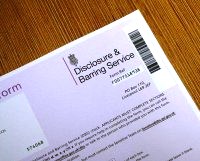
By Ivan MarazionDBS-Form

I write this article as someone who, in my younger days, had issues with addiction. Like many people who fall into addiction, I also fell into petty crime and in my late teens was convicted of theft and burglary. I must take responsibility for my actions, but I must also protest at still being deeply affected by this over 17 years later. It’s important to mention that I have not been convicted of any crime since.

In 2005, after spending many years in active addiction, I entered a drug and alcohol treatment centre. This was the beginning of a new life for me.  After getting clean, I made a decision to go back into education and gained a degree from a top university. I then took a teaching qualification and started working abroad as a teacher. During this time, I constantly felt like a fraud, unable to disclose my previous convictions as I would have never have been employed if I had. As an overseas English teacher I could only earn half what I could’ve earned had I been able to work as a government schoolteacher, abroad or in the UK.  But this is impossible as I will never have a clean DBS check. Prior to teaching I was interested in studying law so made enquiries with the Solicitors Regulation Authority – only to discover it was unlikely I would be able to work in this field either. These are just two examples of where I’ve been stopped in my tracks, unable to move forward with my life. I could cite many more; and every time the feelings of disappointment and anger, at myself and at the system, were totally crushing. I began to feel that everything I had worked hard to achieve was pointless.

In my experience, most people have done something which could have earned them a criminal record, but have been lucky enough not to get caught; whether this was setting off a firework in the street, getting into a brawl or simply a stupid act motivated by peer pressure.  How often do we hear about the politician who smoked dope but didn’t inhale? My point is that we all have pasts. Surely someone who has taken responsibility for their past actions should be allowed to rehabilitate fully and not be punished for the rest of their life? Should people like me just accept our lot and enter unchallenging, mundane, soul destroying employment or perhaps claim benefits and sit around in our underpants watching Jeremy Kyle? I have worked hard and struggled to become a better person; to educate myself, to try and find worthwhile employment and lead a fulfilling life. People who have done their utmost to rehabilitate should be allowed to do just that.  It can’t be good for the individual or larger society that such a large group of people are held back in this way.  The constant feelings of being ‘less than’, or being a fraud and the worry of being found out if you haven’t been totally upfront about your past, are degrading and can be mentally and emotionally crippling. These feelings of degradation do very little for ones self-esteem and sadly for some can lead to a vicious circle of further crime and substance abuse.  My choice, and the choice for many, is this: lie and risk being found out because there’s a system in place that’s likely to expose them sooner or later, or be up front and risk rejection.

Now and then a glimmer of hope appears, most recently in the form of the new filtering process brought in earlier this year. It was exciting to think, just for a moment, that in some circumstances I may not have to reveal myself as a second class citizen and a criminal.  Sadly, my joy was short lived when, after sifting through the myriad of offences and circumstances which were exempt from the filtering process, I noticed that the system would not benefit me as I had multiple convictions.  Anger rose up in my body before collapsing in on me in the all too familiar form of regret and disappointment!

I was asked what name I wanted to use when this article was published; did I want to use my own or a pseudonym?  After much consideration I’ve decided to use a pseudonym because I’m not proud of having criminal convictions and, sadly, people make immediate negative judgements if a person has convictions – despite any reparative steps they may have taken.  Unfortunately, the current system aims to expose people like me unnecessarily, resulting in many currently law-abiding people being scarred for life.

There is only one conclusion to come to: the system needs to be changed in order to prevent ruining the lives of those who have already paid the price for their crimes.

Don’t give up

By Elaine

I was 19 when I was convicted for theft from my employer.  I received 200 hours community service.  I couldn’t give a precise reason why I had stolen the money, it was many factors and this was a very low time for me.  Thankfully I had a supportive partner, who is still with me.

Trying to get a job became difficult.  At first I didn’t want to try as I was ashamed, and people certainly judge you. After time I knew I had to, otherwise it would always hold me up in life. I had quite good qualifications from school and knew I was capable of a decent job.  However, completing applications felt like a bit of a waste of time as I had to declare my conviction and I knew I wouldn’t get a response, which I didn’t.

I started to look more at the small personal adverts and rang one.  I got a part time job doing telesales and it felt good to be contributing and working with others. Sometimes it’s easy to forget the importance of self worth.  This led to the company referring me to someone who employed me on a self employed basis, thankfully no questions were asked and so this worked fine for about 18 months. My lucky break came when my brother recommended me to his employer and I got a full time admin job.  I was so grateful and told the employer about my conviction after I’d been there a few months. I stayed there for about 8 years and after that it became so much easier to get a job, especially once my conviction became spent. I’ve gone on to have a job with Barclays, Citizens Advice and now the local council.  Thankfully the new Disclosure rules are so much fairer for people.  We all make mistakes and I’d simply recommend to people not to give up.

We want to make sure that our website is as helpful as possible.

Letting us know if you easily found what you were looking for or not enables us to continue to improve our service for you and others.

Was it easy to find what you were looking for?

Thank you for your feedback.

12.5 million people have criminal records in the UK. We need your help to help them.

Help support us now